Malonic acid
Lactic acid, succinic acid, FDCA, which acid comes next?
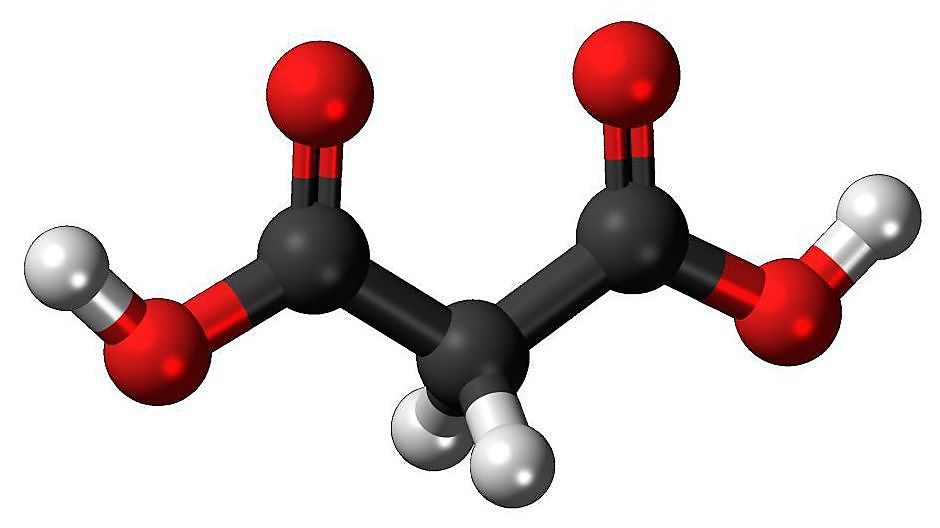
It just might be malonic acid (CH2(COOH)2). The current production process requires sodium cyanide and chloroacetic acid; nasty stuff. Yeast and sugar as raw material would be much friendlier. You can guess the rest: somebody has patented a way to scramble the DNA of a poor yeast cell so that it does something it would never have thought of doing. The ‘somebody’ in this case is Lygos, a spin-out of the University of California at Berkeley.
One of the nice things of malonic acid is that it contains 4 oxygen atoms for 3 carbon atoms. That is more than is present in the original sugar molecule, which makes the raw-material cost more favorable than for, for instance, ethanol. The National Renewable Energy Laboratory/Lawrence Berkeley National Laboratory are presently engaged in a $300,000 project to scale up the process from bench scale to pilot scale. In a recent article the NYTimes has put the process in the context of a “comeback of clean tech”.